12.5.25 Update

We made it! On behalf of our whole team down here in Agronomy at Shadow Hawk, we are so excited and thrilled to be open. It's been great seeing so many members out playing and enjoying the course again.
I'm so very thankful for my team and all the hard work they put in over the course of the regrassing project. We are very proud of where we got the property (unfortunately 1.2" of rain that Saturday morning we opened put a bit of a damper on our presentation) but the sun returned that afternoon and it looked awesome out on the course.
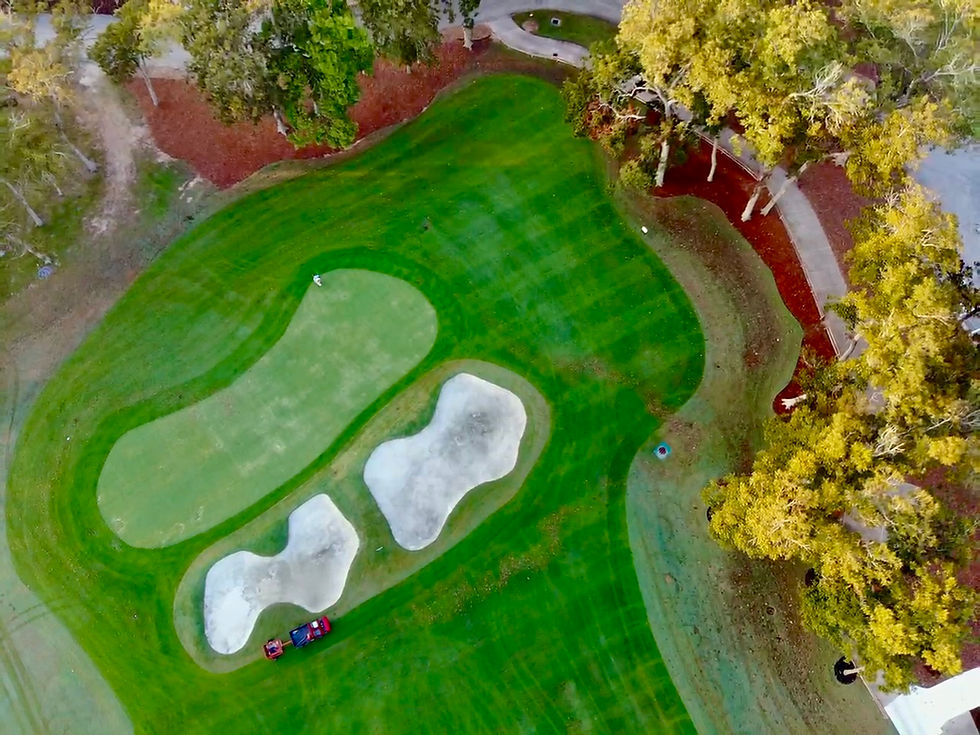
The practice areas have really started to pop and the agronomy team did a great job executing the overseeding of the chipping area, range tee, and targets on the range floor.

Perennial ryegrass was broadcasted and spread over the existing bermuda grass to give us a great playing surface to practice off of this winter and gives us the ability for divots to recover quickly since the ryegrass is a cool season grass and likes to grow this time of year. Overseeding the targets will help give us definition and should help you see the ball easier as they land in those areas.

On hole 1, we cleared out a big section left of the lake, limbed up the trees, pulled out most of the aquatic plants and overseeded the ground over there with annual ryegrass. I've been encouraged by the progress over in this area and it gives that opening tee shot a more dramatic look and feel.
We will work this winter on raising the canopies up on the section of trees closer to the green complex and continue to overseed around the remainder of the second lake.

On hole 7, we cleaned up the lake bank from the tee towards the green complex and laid fresh sod along the edge of the water. The aquatic plants in these areas weren't meant to be there and had started obstructing some of the sight lines from tee boxes.

Same thing here on hole 17. We removed the aquatic plants and sodded the lake banks down to the water edge. It gives the hole a really formal and clean look.

The putting surfaces on the course are in a great spot as we head into winter and I've seen a lot of root development down into the 4" depth range.
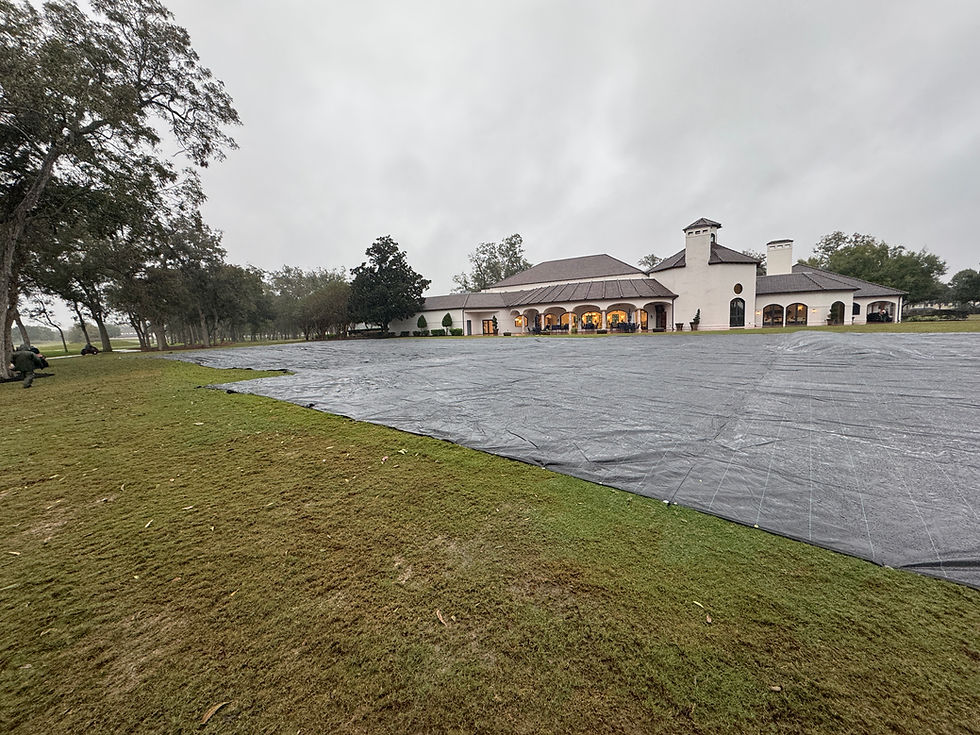
The practice greens were a little slower to grow in during the regrassing and required extra fertilizer through the months of October and November to push them to fill in the turf canopies. A consequence of pushing them harder with extra nitrogen these last two months was that the root structures didn't develop as well as holes 1 through 18.
Nitrogen fertilizer promotes vertical growth aka green tissue. When the plant focuses on vertical growth, it doesn't have much energy leftover to develop roots.
We are aware of this and will take extra steps / precautions this winter to help protect them until we start growing roots again this Spring. For example, when temperatures dip into the 30s, we will cover them with our tarps to hold extra heat and help them handle the stress of the cold weather.

We also have some shade challenges this time of year that we are trying to stay ahead of. For example, here on the practice green by hole 1, this corner of the putting green doesn't receive full sun until 1pm or so in the afternoon during the month of December. The yellow rope in the middle of the green is a visual for my greens mowers. They know not to mow any of the grass past the yellow line because the turf has been weakened by the lack of sunlight.

I use an app on my phone called Sun Seeker to identify problem trees that block a majority of the light trying to reach the putting surfaces. As you can see on the yellow line arching from left to right, we have a a dense population of mature pecans in this portion of the property blocking sunlight through a majority of the day.
Without adequate sunshine, bermuda grass, especially on putting surfaces, struggles to grow and recover this time of year.
I'm working with the leadership team here at the club about a tree removal plan in these problem areas. We want to preserve as many as we can and make smart decisions about the ones we decide to take down.
We still need to maintain the playing surfaces so it's a delicate balancing act on these shaded greens. I use the lattice boards with my greens mowers to cover up weak areas and give the operators a visual so they know not to mow the grass here.
Follow closely as my operator lifts the mower before the board, walks off the green, and doesn't set the machine down until he gets past the board again. This is critical in these weak areas because if you continue to mow compromised turf, you will eventually have no green tissue left and will have to sod that area.

To help alleviate some of the shade stress, we use our aerifier machine to create small holes in the turf. The main goal here is to help break up the algae layer that forms on the surface of the grass.

Additional spray applications are made to these weak turf areas as well. We mix extra fertilizers, fungicides, and plant hormones to help the plants continue to grow and to protect them from turf disease.
We won't start to recover much until temperatures rise again in the Spring so the goal right now is to be proactive and protect the turf we have on the greens.

You'll begin noticing some traffic posts and boards throughout the property as well. They help protect high traffic areas and will give us the ability to manage traffic stress from vehicles and people easier.
A few notes on bunkers. To encourage the golf ball to roll down to the floor of the bunkers, we rake the edges of the sand with the smooth side of our rakes. Ideally, any ball the rolls up the slope will roll back down to the flat area of the bunker.
We hand rake a majority of our traps and try to only use our machines after heavy rain events to break up compaction and fluff up the sand.
New sand shipments have been made to the club and I'll be working closely again with the golf staff to identify bunkers that need sand and addressing these areas first.
Thanks for reading and being a member.
Willie


Comments